
As befits my age and station, I’ve spent the past few weeks in a rabbit-hole of road cycling. I haven’t yet got all the kit to go full MAMIL (Middle-Aged Man in Lycra), but I’m on my way to mastering the jargon. I’m learning about the merits of carbon and aluminum frames, Shimano and SRAM groupsets, and different styles of stems and dropouts. I have spent hours shopping for the right clothes and considering the merits of various app subscriptions.
And critically, I’ve learned the snob’s term for low quality products: bike-shaped object, a thing with wheels and a seat that isn’t truly fit for riding.
The term draws the distinction between good and bad products, of course, but most importantly, it draws the distinction between the speaker as an expert and the masses who don’t know any better. Someone who talks about a “bike-shaped object” is also saying this guy (it’s usually a guy) knows what he’s talking about.
Every subculture and area of expertise seems to have a term like this, an insult that establishes the speaker’s insider knowledge and status. Wine connoisseurs reject plonk or, if they’re especially distinguished, disparage the international style (too sweet, don’t you know). Weed connoisseurs won’t bother smoking schwag or boof or mids, and car and motorcycle lovers obviously have endless disparaging ways to refer to rival marques and styles (except perhaps Mustang fans, who don’t know any better, bless their hearts).
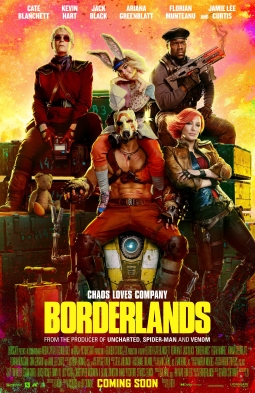
Bike-shaped object resonates with me because the formulation really works for so many other domains. For example, even though I’m not a film expert by any means, I recently encountered something I immediately recognized as a film-shaped object: Borderlands, horror director Eli Roth’s PG-rated adaptation of the ultraviolent video game.
Just like a bike-shaped object, Borderlands has all the pieces of a film but somehow fails to work as one. It’s got actors, including Cate Blanchett, Gina Gershon, and Jamie Lee Curtis. It’s got a hero’s journey, a cast of characters each with their own flaws and strengths, some character development, a bit of pathos, and of course some comic relief courtesy of Kevin Hart and Jack Black. It’s got special effects and a marketing budget and an established intellectual property tie-in.
And it’s unrelentingly, irredeemably terrible. We kept watching simply to see how much lower it could go. Perhaps it will be a cautionary tale for film school students, or a cult classic. But it is, undoubtedly, a film-shaped object rather than a real film. There’s only one reason to avoid calling it that: it’s so obviously bad that even non-experts like me can tell it’s a disaster. And if you can’t use your disdain to be exclusive and special, what’s even the point?
Outrage
I am yet again glad we stopped paying for the New York Times, as their pursuit of false equivalence leads them to try to compare “housing policies.” On the one hand, you see, is the Democratic party policy of housing construction and homeownership. They contrast that with the totally legitimate Republican party “housing policy” of militarized deportations of people with brown skin.
(Oh, sure, just undocumented immigrants, right? No note of how as many as one percent of all people in ICE custody are actually citizens? Gosh, who would ever have thought that an anti-voting policy that makes it harder to get citizenship documents might also harm citizens?)
Joy
There is no way you could get me to do this with a tiger, no matter how friendly.
 Secretly Ironic