Consider the Market for…

Once again I’m not going to comment on the sexual abuser in chief, his tax fraud, his sex-creep pals and staffers and minions. I’m just not. Everyone else has said more and better. Consider the market for hot takes: supply has long since exceeded demand.

Twitter Commentary from Unlikely Sources
There’s social media marketing, and then there’s Steak-Umms, the discount frozen meat product, which has slowly amassed a huge following, and then exploded the other week with a lengthy disquisition on the sadness of youth, which contained only one meat pun:

why are so many young people flocking to brands on social media for love, guidance, and attention? I’ll tell you why. they’re isolated from real communities, working service jobs they hate while barely making ends meat, and are living w/ unchecked personal/mental health problems — Steak-umm (@steak_umm) September 26, 2018

And then there’s Madeline L’Engle, with some trenchant political commentary from YA fiction:

“Stay angry, little Meg,” Mrs Whatsit whispered. “You will need all your anger now.” — Madeleine L’Engle (@MadeleineLEngle) September 27, 2018

Linguistic evolution
The word “gammon,” a British term for a type of ham, has only recently become a word used to describe a certain type of angry conservative man. Popula explains the origin, along with plenty of hilarious examples.

I’m taking Economics 101 here are my hot economics takes
(Yes this is going to be a recurring section now)

One of the things I’m struggling with in my econ homework is the way terms are defined so narrowly for economics purposes, but used in a general sense with such broad definitions. When something is hard to find and expensive, I think of it as a shortage, but economics defines that situation as scarcity. A shortage is an entirely different phenomenon, caused by prices being too low to make it worth the time of producers to produce.

And of course, “welfare” and “social surplus” are all defined in ways that make sense on a chart but get very, very messy in real life, because they only make sense in a perfect market. (This is true of every discipline, I expect — Physics 101 assumes zero friction and ideal gases, Chemistry 101 assumes reactions are always complete, Biology 101 assumes Mendel’s phenotype charts are close enough to accurate for now). In this perfect market, buyers and sellers make the choice to buy or sell based on how much they value a given product. This creates the maximum social surplus, in which buyers get what they want (products) and sellers get what they want (money). This works very well when there are plenty of sellers, plenty of buyers, everyone’s well informed, everyone knows what they want and how much they want it, and anyone can choose to exit the market or choose substitute products if they don’t like the deal. That, of course, almost never happens in the real world.

My first paper for class contrasts this fictional ideal market with the market for wheat in Ireland in 1845, and the market for insulin in the US today, something I’ve covered in this newsletter before. The economics textbook way of describing the famine was that blight caused a reduction in supply of potatoes (not a shortage, that’s different). This increased demand for a substitute, wheat. The English clearly valued wheat more than the Irish, since they paid more for it. Irish consumers then exited the market for wheat by emigrating or simply starving to death. This is, clearly, not the market distribution of goods envisioned when students chart the market for bottled water or iPhones.

My textbook insists that economics is not normative — that economics as we study it is purely a descriptive effort. We do not decide whether it is good to have a minimum wage or a government redistribution or price support. We describe the effects. It just so happens that the effects we model in our charts aren’t quite the ones that happen in real life. The answer, of course, is that three weeks of an introductory economics course isn’t nearly enough understanding to set global economic policy. (Sadly, that’s a good deal more than most policymakers will ever have…)

See also
If “the economy” is doing so well, how come American workers aren’t better off?

Cultivating joy
Send bread do not ask why
Kitten visits puppy.
Capybara and bunny.

The Cold Frisson of Franklin Morbidly Displacing the Erotic Potential of Sexual Attraction

I’ve been reading a lot, and worrying a lot, about the court, and rape culture, and all that. And I’ll say this: I don’t have a lot to say that hasn’t already been said. A friend of mine suggested that I write more about it. About how men and women both participate in, marinate in, the rape culture that surrounds us. But I think I don’t have anything to add. I think shutting the hell up and listening to other people is probably a better contribution to the conversation for right now.

I’m angry. I’m afraid. I’m thinking I should do something but I don’t know what. Emergency supply stockplies. Protests. Sharing angry memes on the internet.

The Republican party seems transparently pro-rape, pro-racism, pro-patriarchy. It seems to make manifest the idea, expressed by Frank Wilhoit, that “conservatism consists of exactly one proposition: There must be in-groups whom the law protects but does not bind, alongside out-groups whom the law binds but does not protect.” Despite all this, Gallup says approval of the Republican party is the highest it’s been in 7 years.

This note from the centrist, sensible Noah Smith, a former finance professor and current Bloomberg columnist, chills me:

Possible ways that I see the current era of U.S. political turmoil ending:
1. Everybody calms down and things go back to normal
2. Coup/civil war/national breakdown
3. War with China and/or Russia (but probably China)

So, basically:
1. The 1970s
2. The 1850s
3. The 1930s

Noah Smith (@Noahpinion) September 26, 2018

Option 1, obviously, is still the most likely. But there’s a nonzero chance of the others.

Links

Pop!
Trap isn’t necessarily the hip-hop subgenre you’d expect to get the literary-magazine treatment, but N+1 has an article titled “Notes on Trap” and it’s glorious.

See also: Pitchfork’s explanation of the history of autotune.

I’m Taking Economics 101 So Here are My Hot Economics Takes
My economics textbook describes the market for insulin as almost perfectly inelastic: A reduction in price won’t move more units, because people don’t use more than they need. An increase in price won’t move fewer units, because people can’t buy less than they need. Except, of course, that there are limits even to the near-perfect. Insulin prices keep going up. It’s killing people.

(After all, as I’ve quoted repeatedly, “If it isn’t making dollars then it isn’t making sense;
if you aren’t moving units then you’re not worth the expense
…”)

Meanwhile, the exploitative app economy meets exercise compulsion meets community service: The CitiBike Angels.

Cultivating Joy
If you find stuff online you think should be in the newsletter please send it in. For example, our friend Dora sent in this dog imitating a person doing lunges.

Golden Age of Euphemisms

This semester I’ve signed up for an introduction to economics. My professor spent the first half-hour of this week’s class explaining the difference between a command economy and a market economy. In a command economy like the old USSR, he said, assets are theoretically allocated according to need, but in practice allocated according to proximity to power. In a market economy, however, assets are mostly allocated according to the individual contribution to production.

He actually managed to say this with a straight face.

I know economics 101 is a gross simplification of the actual functioning of an economy, but it’s so far from reality that it’s almost unrecognizable. If assets in the US economy were allocated according to individual contribution to productivity, teachers wouldn’t have to work multiple jobs, Disney wouldn’t have so much influence over copyright law, Betsy DeVos wouldn’t have so many boats, and her brother Erik Prince wouldn’t be marketing a privatized war service.

Euphemism and Dystopia
“Great reporting,” says Matt Yglesias about a recent Washington Post article, but “my God are we living through a golden age of euphemisms.” The euphemism in question is “racially charged.” It means “racist.”

For example, when we say the acting director of ICE attended a conference hosted by a “racially charged” group, we mean “the person in charge of immigrants in this country is a racist.”

Or when we say that Secretary of Commerce Wilbur Ross has been trying to fiddle with the census in ways that have racially charged implications, we mean that Secretary of Commerce Wilbur Ross is trying to stop Latinos from voting.

Even the wolves are getting radicalized:

YOU WILL NEVER BE A BILLIONAIRE BUT THERE’S STILL TIME TO SEE WHAT THEY TASTE LIKE

NOT A WOLF (@SICKOFWOLVES) September 14, 2018

On the plus side, we may yet avert the eco-pocalypse through infertility. Although probably not.

Willie Nelson has a good message for people who want to vote for Ted Cruz:

Twitter Interlude: Whale Facts

whales have fewer legs than most tables

whalefact (@awhalefact) August 28, 2018

Cultivating Joy
This very good dog watching herself win an agility competition.

This cartoon cat.

About suffering they were never wrong

We’re in the midst of a constitutional crisis. A manifestly unqualifed, poorly-vetted, corrupt justice is about to be installed on the Supreme Court. The foxes are trying to hedge their bets from inside the henhouse.

Even in ultra-liberal Massachusetts, 35% of Republican voters cast ballots for a man credited with triggering a yearslong wave of anti-gay violence in Uganda. In a shocking echo of Hungarian fascism, Texas has ordered school districts to stop funding education for migrant children. Government cruelty to immigrant citizens is now extending to Vietnamese-Americans. The government officials marketing this sort of cruelty have a longstanding process of making money from it even when the policy is overturned.

Anyhow, in a corner, some untidy spot, where the dogs go on with their doggy life… the economy has somewhere to get to and sails calmly on. We still have to work.

Good economic news!
A while ago Alexandra Ocasio-Cortez was criticized for saying “unemployment is low because everyone has two jobs.” The fact-checkers said, well, actually “everyone” is an exaggeration, and the number of multiple-job-holders isn’t that significant. Her correct and important point – that the unemployment numbers don’t reflect the very serious problems of wage stagnation and overall misery – was (of course) ignored in a rush to pile on to her slight inaccuracy. (For some reason this level of scrutiny isn’t applied to certain male officials with white or orange skin).

I’m one of the people the fact-checkers say is statistically insignificant: When I took my third job, I rose to about 30 hours a week, so the state cut off my unemployment benefits and now counts me as one of the gainfully employed. I’m good economic news! I’m also getting a great lesson in precarity: I don’t know from week to week how much I will bring home, much less my annual earnings, although I’m pretty certain they’ll be substantially lower than last year. If my household were actually on the brink, as so many American households are, it would be really, really bad.

This week, I got another job. I’m not yet at the level of Kevin Gates, boasting “GET IT GET FLY I GOT SIX JOBS I DON’T GET TIRED” but for those of you keeping track at home, I’ve got four jobs now: Essay coach, two consulting gigs, and now poll worker.
kevin-gates
Like all the others, being a poll worker is seasonal, temporary, and contingent. In this case, it’s roughly minimum wage, and there are just a handful of available workdays each year: Primary election, early voting, and general election. The primary this past Tuesday was my first day on the job. It was hot and the chairs were uncomfortable and I have a newfound distaste for people who write in no-hope candidates as a protest, because I had to count them at the end of the night, but it was mostly a great experience and I made about $165. Good economic news!

This month one of my other jobs is ending. Sort of.

See, the organization has a policy to prevent exploitative perma-temp arrangements, so I can’t be a temp anymore. Instead, I’ll be a consultant. Of course, they also have policies to prevent exploitative miscategorization of employees as consultants. A consultant has multiple customers and advertises for multiple customers, so I needed to update my LinkedIn to reflect that. Merely looking for a full-time job and doing some freelance work doesn’t make me overtly consultative enough. Moreover, a consultant doesn’t have a dedicated desk and doesn’t use dedicated company resources. So I have to take my name and the photo of my wife out of the shared cubicle (five people, four desks). Consulting!

Mistakes were made on all sides
A plainclothes cop left his unmarked vehicle running while picking up a to-go order at a pizzeria. Two teens jumped in for a joyride and were unsurprisingly caught. And beaten. And cuffed. And then beaten some more. Also attacked by dogs.

And then the recording of the interrogation was released:

Welcome to White Town motherfuckers…. I’m not hampered by the fucking truth ’cause I don’t give a fuck! People like you belong in jail. I’ll charge you with whatever — I’ll stick a fucking kilo of coke in your pocket and put you away for 15 years.

The officer in question was given a 60-day paid suspension.

(Note that the “Rin Tin Tin Myth” makes police dogs seem noble and friendly. Arrests with dogs are brutal.)

(Must be nice to have a union. I would be fired immediately from any of my several jobs for doing any of the things that cop did, starting with leaving a company vehicle unattended with the keys in the ignition).

Cultivating joy
Don’t look behind you, there’s a bird trying to keep up. (I can’t remember if I posted this before but it’s still funny to me).
A short story read by a former student of mine. Another story of hers will be in The Best American Short Stories of 2018, edited by Roxane Gay.
Some birds teach each other how to do stuff.

Trouble With a Capital T

We got trouble with a capital T that… yeah. The Washington Post reports that “the Trump administration is accusing hundreds, and possibly thousands, of Hispanics along the border of using fraudulent birth certificates since they were babies, and it is undertaking a widespread crackdown.”

See, once it turned out that Obama had a birth certificate, nobody could trust birth certificates anymore. Because obviously Obama wasn’t American. You know, you have to be American to be a citizen. I can’t exactly define what that means, but I know it when I see it.

I mean, you better not have a Bank of America bank account if you’re not One Of Us.

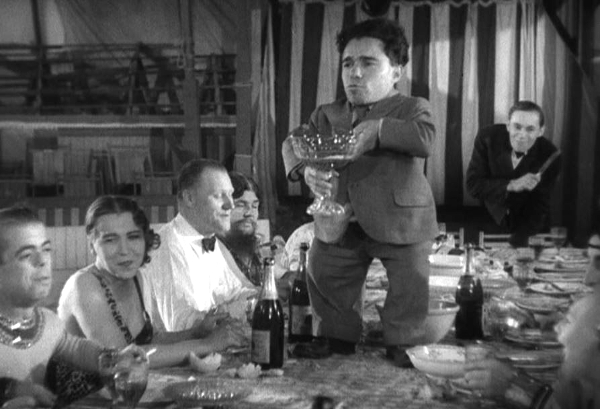
And yes, I am specifically referring to the horrifically exploitative pre-code film Freaks:

freaks-movie-still
Like looking in a mirror
In Hungary, there’s a tax on doing anything nice for immigrants.

There’s a new sexism scandal at a Tokyo medical school.

Chinese parents are furious as their expensive school district admits kids from poor regions. Solution: A “poor door” so the children of migrants don’t wind up in the classrooms of property-owners.

Big ideas
Francis Fukuyama tries to explain why history stubbornly refuses to end. His original prediction has become, at this point, a punchline more than an idea.

For example, StrongTowns has a great article this week on what they’re calling the “irrelevance of thingies,” by which they mean that the Internet of Things type hype is largely just hype. They contend that cities actually matter even more than they used to:

It’s been more than two decades since Frances Cairncross published his book The Death of Distance that prophesied that the advance of computing and communication technologies would eliminate the importance of “being there” and erase the need to live in expensive, congested cities. (It goes down, along with Francis Fukuyama’s The End of History and Kevin Hassett’s Dow 36,000 as one of the demonstrably least accurate book titles of that decade.)

Cultivating joy
Cat is terrible dinner guest.
Cat is rude to marine life.
Swarm of very wrinkly little puppies.

Individual 1 For President

Someone must have set ’em up
Now they’ll be workin in the cold grey rock
Now they’ll be workin in the hot mill steam
Now they’ll be working in the concrete
In the sirens and the silences now
All the great set-up hearts
All at once start to beat…

individual-1-bumper-sticker
Dime con quién andas y te diré quién eres…

Legacy
Adam Serwer notes the very American precedents for the Trump kleptocracy… and also reports that these two paragraphs have inspired a great deal of hate mail:

Many commentators have described that kind of authoritarianism as foreign to the United States. But it isn’t. It has its inspiration and precursor in the racial kleptocracy of the Jim Crow South, in which states were essentially criminal enterprises that existed to expropriate black wealth, exploit black labor, disenfranchise black voters, and shield acts of racist terrorism and violence from prosecution.
Remnants of this society are still with us, from mass incarceration, to discrimination against black jurors, to stand-your-ground laws. But alongside it, America retains a system in which the wealthy remain largely immune to [punishment for] financial crimes. Weak laws and regulations make the prosecution of financial crimes difficult, and prosecutors are often loath to pursue individuals who might be able to fill their campaign coffers come election time. Whether the president is Barack Obama or Donald Trump, the rich can afford a different kind of justice than everyone else.

Big ideas
What is the fate of capitalism? Well, that depends on what you mean by “capitalism” doesn’t it?

Seattle fears becoming San Francisco, split between wealth and shitting in the streets.

Article suggestions from our friend Kevin: Slavery inspired Taylorism, the root of modern management theory; Do robots already rule the world?

Cultivating joy
Big cats carrying big kittens
Cats are liquid. Pro and con.

Double Standards

Ben Shapiro, a debate-team champion who peaked in high school, has challenged congressional candidate Alexandria Ocasio-Ortez to a debate. One generally debates another candidate, not some jabroni, especially one known for bad-faith rhetorical tricks like the Gish Gallop. But hey, the Times sure is determined to cover this controversy.

The NYTimes and others are criticizing Alexandria @Ocasio2018 for not debating Ben Shapiro, but they’ve let Andrew Cuomo refuse to debate @CynthiaNixon for months without a single op-ed. I’m sure there’s a solid reason other than sexist double standards.

Abolish ICE and all borders (@markaprovost) August 10, 2018

There is a striking contrast between the scoldy, condescending tone of coverage of @Ocasio2018’s budget hand-waving and the decade of credulous-verging-on-worshipful coverage of the same from Paul Ryan.

Matthew Yglesias (@mattyglesias) August 11, 2018

NPR, that bastion of liberal bias, interviewed two different people on both sides of an important issue. On one side, an activist who wants cops to stop murdering black people. On the other, a white nationalist! Gosh, there really are two sides to every issue and they all deserve a lot of consideration!

And in addition
“Silent Sam,” the confederate monument erected in 1913 as part of a white supremacy movement at the University of North Carolina, has been taken down. The university administration is very concerned that someone could have been hurt during this rude, rude act of vandalism. (In contrast, the Classics department issued a statement almost a year ago, noting that the statue should have been long gone by now).

See also
Meanwhile, cities are freaking out about rideshare and app-based dockless bikes and e-scooters. There are risks! There are externalities!

… if you’re worried about a technology that occupies a lot of public space, undermines public transit, and sometimes injures pedestrians, I’ve got some bad news for you about normal cars.

Matthew Yglesias (@mattyglesias) August 11, 2018

Wholesome, yet slimy
Another look into the travails of the American snail-farmer.

The future
What happens when you can’t drive and can’t easily get yourself into a taxi or rideshare vehicle? Do you suddenly realize that building your entire geography around cars was a bad idea?

Careers
A word about the hiring process and what it reveals about how it is to work at your organization:

Conway’s law states that “Organizations which design systems … are constrained to produce designs which are copies of the communication structures of these organizations.”

Prince states “I guess I should’ve known by the way you parked your car sideways/That it wouldn’t last”

In other words, how you do one thing is how you do everything.

Cultivating joy
A thread about chubby pets rated on a scale from “A Fine Boi” to “O LAWD HE COMIN” 

Stranger than Fiction


You can’t make this stuff up: Trump’s EPA is bringing back asbestos. In a gigantic coincidence, one of the world’s largest suppliers is Russian mining company Uralasbest, which recently began to use Trump’s face on its packaging:

Other Mainstream Republican Ideas

“The America we know and love is vanishing… Massive demographic changes have been foisted upon the American people. And they’re changes that none of us ever voted for and most of us don’t like.”

 Laura Ingraham, speaking for Fox News.

So, how shall we engage respectfully with these ideas? How shall we treat the statement “brown people made me sad” as a valid expression or idea with which polite society ought to engage?

(How does she manage to square it with her adoption of a Guatemalan daughter? Easy. She regards her as “one of the good ones.”)

Anyway, after this latest “gaffe” it might be time to re-evaluate her “accidental” Nazi salute to a supersize president on video.

Long reads
Modularity is “kind of a characteristic of modernity,” but modularity in our supply chains can lead to moral compartmentalization and moral blindness. How does that impact our interactions with the opaque systems around us, and the way those systems impact the people at the other end of those black boxes? 

Supply chains are phenomenally complex, even for low-tech goods. A company may have a handle on the factories that manufacture finished products, but what about their suppliers? What about the suppliers’ suppliers? And what about the raw materials?
“It’s a staggering kind of undertaking,” said Bonnani. “If you’re a small apparel company, then you still might have 50,000 suppliers in your supply chain. You’ll have a personal relationship with about 200 to 500 agents or intermediaries.

Part four of a series on Cobb County, GA and its absurdly corrupt and counterproductive planning process:

The $400 million in public funds put toward the [Atlanta Braves baseball] stadium were not up for a vote, and there was hardly any opportunity for public comment. The deal also came with some unconsidered costs—not the least which was the bill for the stadium’s extensive parking… resulting in the creation of an $11 million dollar walking bridge over Interstate 285… The original agreement also overlooked the cost of police presence, saddling the county, rather than the team, with this mysteriously unforeseen expense.

(To close the shortfall, they’re closing libraries in poor neighborhoods. Surprise!)

That Grey Poupon that Evian that TED Talk
But seriously check out the Onora O’Neill TED talk on trust. Even if you hate TED talks, even if you don’t want to know about the theory or philosophy of trust and trustworthiness, listen to this one for the accent and vocabulary. Trust me. (Plus her official title is The Right Honourable Baroness O’Neill of Bengarve,CH, CBE, FRS, FBA, FMedSci. You can’t beat that legion of honors.)

Cultivating horror
The long-horned tick has arrived in the US and is spreading rapidly
A cop tased an 11-year-old. Tasing children as young as seven is allowed by police policy.

Cultivating joy
This mini horse running on a beach.
Animals interrupting nature photographers.
Cat feet fit perfectly.
Tiny kitten & giant dog.
Wholesome cowboy cartoon.

Hindsight 2020

If you thought Pizzagate was absurd, just wait til you hear about QAnon. It’s everywhere. It’s nonsense. The short summary is that people think that almost everyone except Trump is a pedophile. They seem to be divided on whether Mueller is in league with the pedos, or actually working with Trump to use the Russia investigation as a cover to prove that Hillary Clinton and Barack Obama are actually trafficking child sex slaves in collaboration with Chrissy Teigen. I’m not linking to any of it, but Roseanne Barr is a serious believer in the meshugas.

hindsight-2020

Political correctness is out of control
Texas: High schools violate law, deny students opportunity to register to vote
New York: County clerk refuses wedding license to gay couple
Louisiana: Man asks police to show warrant, so they choke him to death.
Mississippi: People keep shooting the Emmett Till memorial.
Massachusetts: Police called on a Smith College student for eating lunch while black.
Virginia: Senate candidate Corey Stewart is a white nationalist. The New York Times won’t say it.
California: Sikh man beaten by racist attackers… while posting a campaign sign for a Republican.
National: Turns out leftists get fired for their opinions more than right-wingers.

… The “campus free speech” crisis is somewhat manufactured. Conservative student groups invite speakers famous for offensive and racially charged speech — all of the above speakers fit that bill — in a deliberate attempt to provoke the campus left. In other words, they’re trolling. When students react by protesting or disrupting the event, the conservatives use it as proof that there’s real intolerance for conservative ideas.

Much-delayed hatchet jobs
It’s been a while since I insulted David Brooks in this newsletter, so let’s reminisce about the time that America’s greatest diagnostician of moral decay left his wife for his much-younger assistant. And their wedding registry was public. And they asked for very, very, very expensive designer tableware.

Cultivating joy
Roughly 100 goats escaped from a goat-rental service and went to frolic in suburban yards. (Also, you can rent goats. Mostly for weed control, but also because they’re hilarious.)
These cats.
This dad.

Also:

Lemurs self-medicate by rubbing toxic millipedes over their bottoms https://t.co/UDmJzliy9n pic.twitter.com/eX1o2SMtiW

— New Scientist (@newscientist) August 2, 2018

A Mind-Controlling Parasite

Remember, as long as you can take solace from thinking things can’t get any worse, they can definitely get worse.

Theory
A treatise on Urgent Earnestness. It’s the new defensive cynicism? It’s a … thing, anyway. Maybe.

In case you don’t automatically read every post there, check out the most recent one at Gin & Tacos, about the Museum of Communism in Prague. (I think he’s oversimplifying and exaggerating to make the point, but it’s an interesting point).

Oh, under communism lots of people were imprisoned? People
didn’t feel free? Government was corrupt and unresponsive? Wow interesting tell me more. Through that lens even the line of argument that capitalism is awesome for consumption looks a little wobbly; “Most people couldn’t get the things they wanted or needed” sounds an awful lot like “Most people can’t afford the things they want or need” and the difference is semantic. I guess if the reason people end up under-provided for is the most important thing to you, that argument is
worth having. In practice it isn’t.
Finance
Where did all the money go? Duh, it went to offshore tax havens.
(TLDR: “Wealth inequality measures have been grossly understating
concentration because of tax evasion and tax avoidance in tax havens.”)

Longform
A Medium article about the latest bits of the Nixon tapes to surface. Turns out Nixon and Billy Graham were even more antisemitic than you thought. Surprise. 

A Motherboard article about a group of anarchists who distribute instruction kits for making your own epipens, HIV drugs, and more.

Brad DeLong posted a chapter or so that he’s cutting from a book he’s writing, addressing why China was not as wealthy and powerful in the 20th century as
it might have been. Long, digressive, unpolished, unedited, and kind of
fascinating anyway. If this is the part that’s left on the cutting room
floor, it should be quite a book.

Stranger than fiction

A mind-controlling parasite found in cat feces may give people the courage they need to become entrepreneurs, researchers reported. https://t.co/ZL5WgbxzW4

NBC News (@NBCNews) July 25, 2018

Yep, this little guy is definitely a mind control vector.
As is this one, which appears to be growing right out of the ground.

Cultivating joy
Dog hides under other dog
Dog steals camera
Hedgehogs: not cats, but also very cute, and therefore possible mind-control vectors.